
AI-generated beauty illustration.
By Chloe Bennett | Beauty / Makeup
A rosy wash, a fresh pink, or a little berry depth. Pick one color family and let the textures do the interesting part.
There’s something lovely about a makeup look that feels pulled together without looking overly planned. A little color on the cheeks, a softly defined lid, and a lip that belongs in the same conversation can be enough.
That’s the appeal of monochromatic makeup. You work within one color family, then vary the placement and intensity. The result can be soft or expressive, depending on where you put the emphasis. Here are three ways to approach it, with one coordinating product option for each. You only need to choose the color story you like.
GURLY may earn a small commission if you buy through links in this article.
What is monochromatic makeup?
Monochromatic makeup repeats a color family across the eyes, cheeks, and lips. Think rose with rose, rather than trying to make every area an identical shade. A soft pink cheek and a deeper pink lip still feel connected.
You can use separate products you already own. A multi-use formula is another way to simplify the palette, provided the label specifically allows every area where you plan to put it. Blush is not automatically an eyeshadow, and a lip product is not automatically suitable for the eyes.
For this guide, the shopping options are three shades of e.l.f. Monochromatic Multi-Stick, a cream-to-powder stick the brand describes for eyes, lips, and cheeks. They are alternatives, not a three-product shopping list. Each has shimmer, so choose a different, appropriately labeled formula if you want an entirely matte look.
Pick your starting point
- Rosy mauve: choose a muted color story and let the lip carry slightly more depth.
- Fresh pink: start on the cheeks, then keep the lid layer lighter.
- Soft berry: build in small layers and choose either the cheek or lip as the strongest area.
For any of the three, check your finished face in ordinary daylight before adding more shimmer. If the color is right but the shine feels too strong, keep the color family and switch one area to a matte formula labeled for that use.
1. A soft rosy-mauve look
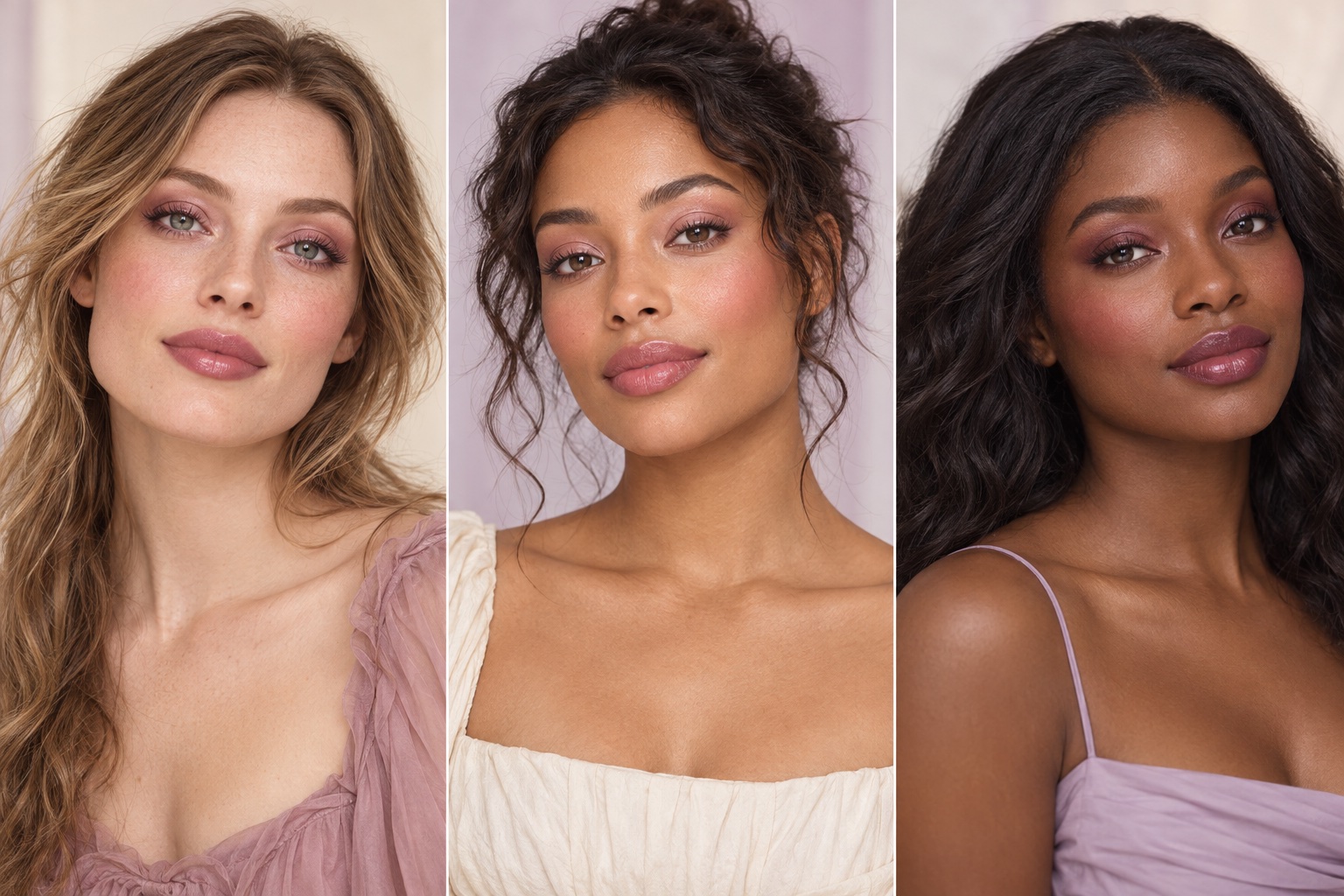
A muted rose is an easy color story to build around when you want a little definition without a sharp contrast between eyes, cheeks, and lips. Keep the lid color sheer and give the cheeks a softly blended edge. Let the lip carry a little more depth if you want the look to feel finished.
How to build the look
- Blend a light wash of an eye-labeled rose or mauve shade over the lid. Keep the edge soft rather than drawing a defined border.
- Tap a small amount of coordinating color onto the cheeks. Pause before adding more, especially with a shimmery formula.
- Press the lip color on lightly, then deepen it in small layers if you want more definition.
We may earn a small commission if you buy through this link.
2. A fresh neutral-pink look
Pink can be gentle without disappearing. The trick is to choose how much contrast you want against your own skin, rather than assuming that the palest shade is always the softest option. A visible pink cheek, a lighter wash on the lids, and a pressed-on pink lip give you a useful starting balance.
How to build the look
- Start with the cheek color so you can judge how much pink you want to see in the finished look.
- Use a lighter layer of a coordinating, eye-labeled shade on the lids. It can sit quietly behind the cheek color.
- Add pink to the lips, then check the whole look in natural light before deciding whether to build any area further.
We may earn a small commission if you buy through this link.
3. A softly blended berry look
Berry is a lovely option when you want the same coordinated idea with a little more depth. You don’t have to make all three areas dramatic. A softly blended cheek and a sheer lid can leave room for a stronger berry lip, or you can keep the lip lighter and give the eyes more attention.
How to build the look
- Begin with less color than you think you need and blend the cheek edges before adding a second layer.
- Keep the eyelid layer thin if the lips will be the focal point. Use a product intended for the eye area.
- Build the lip gradually and step back from the mirror to check the balance of the whole face.
We may earn a small commission if you buy through this link.
Small details that make it work
Let one area lead. Choose the cheeks, eyes, or lips as the main point of interest. Keep the other areas softer, then build them only if the look needs it. Matching intensity everywhere can make a simple idea feel busier than you intended.
Check texture before adding more color. A multi-stick with shimmer brings light as well as pigment. If you already have a shiny cheek, you may prefer less on the lids or a coordinating lip product with a different finish. Staying in one color family doesn’t mean using one texture everywhere.
Work with what you own. Set out a blush you like, then look for an eye product and lip shade with a similar warm, cool, or neutral direction. You may already have the whole look. The shopping options here are useful starting points if there’s a gap.
Keep application clean. Follow the label, wash your hands, and use clean tools. Keep lip-used applicators away from the eye area. The FDA’s eye-cosmetic guidance explains why eye-area suitability and hygiene matter. Stop using an eye cosmetic if it causes irritation.
Before you choose a shade
Start with the finish you actually enjoy wearing. If shimmer sounds appealing, choose the rose, pink, or berry direction you want to explore. If it doesn’t, keep the color idea and look for separate, appropriately labeled products with your preferred finish.
A good monochromatic look has room for small differences. The lid can be lighter than the cheek, the lip can be deeper than both, and the color can stay subtle enough for an ordinary afternoon. The useful part is the connection between them.
Sources and product notes
- e.l.f. Cosmetics: Monochromatic Multi-Stick for product format, intended areas and shade descriptions.
- Target listings for Sparkling Rose, Dazzling Peony, and Luminous Berry.
- FDA: Eye Cosmetic Safety.
Product listings checked October 30, 2026. Formulas, packaging, prices, and availability can change. Check the current label and retailer listing before buying.