
AI-generated beauty illustration.
A haircut can look beautifully layered from the front and almost untouched from the back. Or it can frame your face perfectly and leave the ends thinner than you wanted. “Layers” alone doesn’t tell your stylist which result you mean.
Here are three clearly different options, shown from the front and back. Compare where the shortest pieces begin, how much length stays underneath, and what the bottom edge looks like. Then take the matching request to your appointment.
GURLY may earn a small commission if you buy through links in this article.
First, separate the layers from the outline
The outline is the bottom edge of your haircut. Layers are shorter lengths cut within it. You can ask for long layers and a rounded U-shaped outline, for example; a U shape by itself doesn’t describe every layer inside the cut. Hair.com’s comparison explains the difference between rounded U and pointed V outlines.
The illustrations below show styled examples, not a guarantee of how a cut will fall on every texture. At your consultation, ask to see a reference with a texture and density close to yours, plus a less styled view. That’s more useful than choosing by the model’s face.
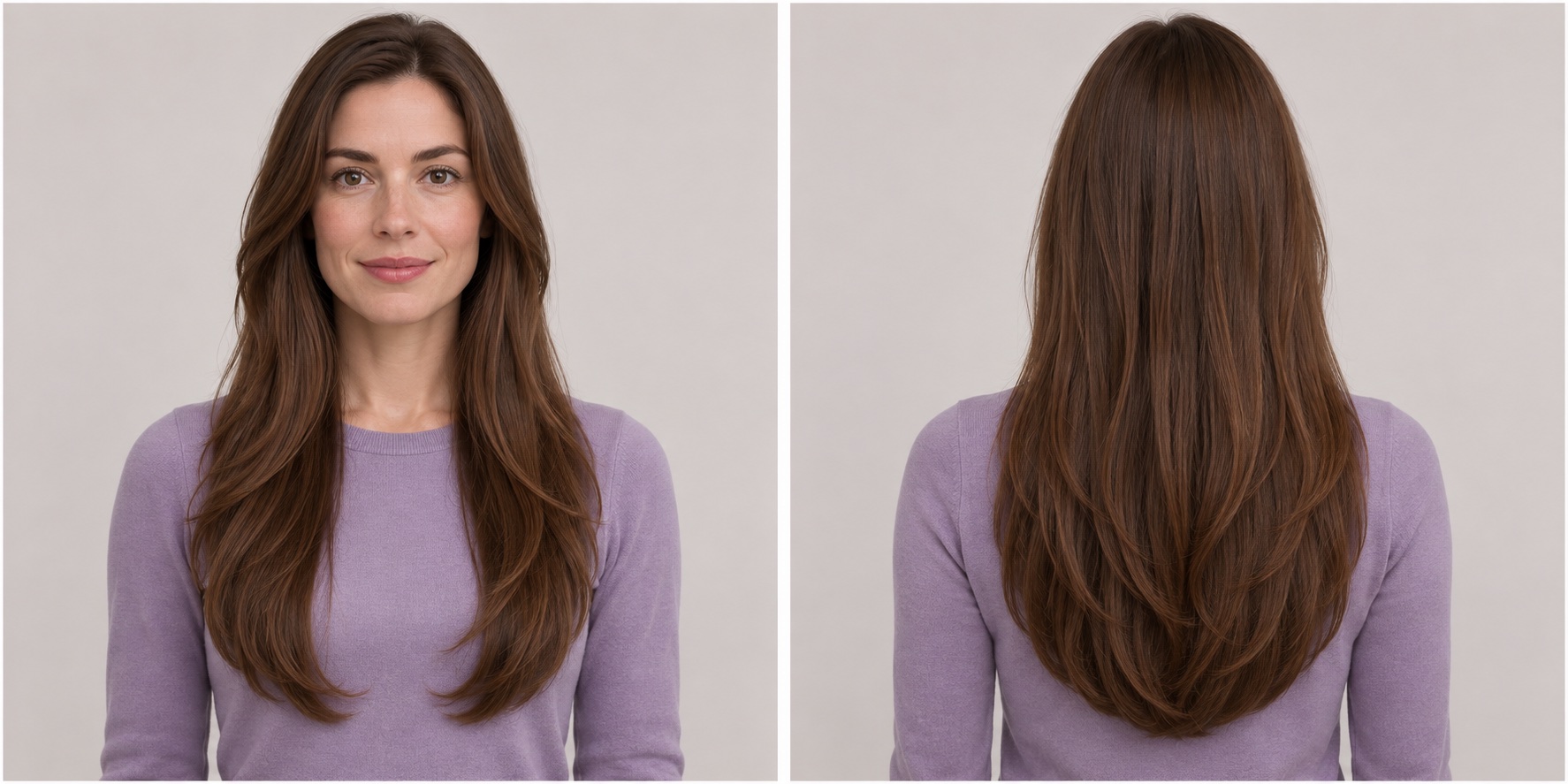
1. Long layers with a soft U-shaped outline
 AI-generated beauty illustration.
What you’re looking at: The front pieces sit well below the chin, and the back keeps a long, softly rounded edge. The shorter lengths add movement through the lower part of the hair rather than creating a short, choppy crown. The ends still read as one substantial shape.
Choose this direction if: Keeping your length is the priority, but you want the lower half to move instead of hanging in a straight sheet. It’s also a useful starting point if you want to keep most of your hair in a low ponytail. Confirm the shortest length against your own ponytail position before cutting.
Ask your stylist: “I’d like long, blended layers and a soft U-shaped bottom edge. Please keep fullness through the ends. Can you show me where the shortest layer would land before you start?”
Make the request specific: Point to the bottom edge you want to keep, then the shortest front piece. Ask whether the proposed layering will make your ends look sparse. If your hair is fine or already thin at the ends, discuss fewer, longer layers rather than copying the illustration exactly.
The styling tradeoff: A bend through the lower lengths makes the layers easier to see. If you usually air-dry, ask how much of that movement will remain without a blowout. The cut and the curled finish are two separate decisions.
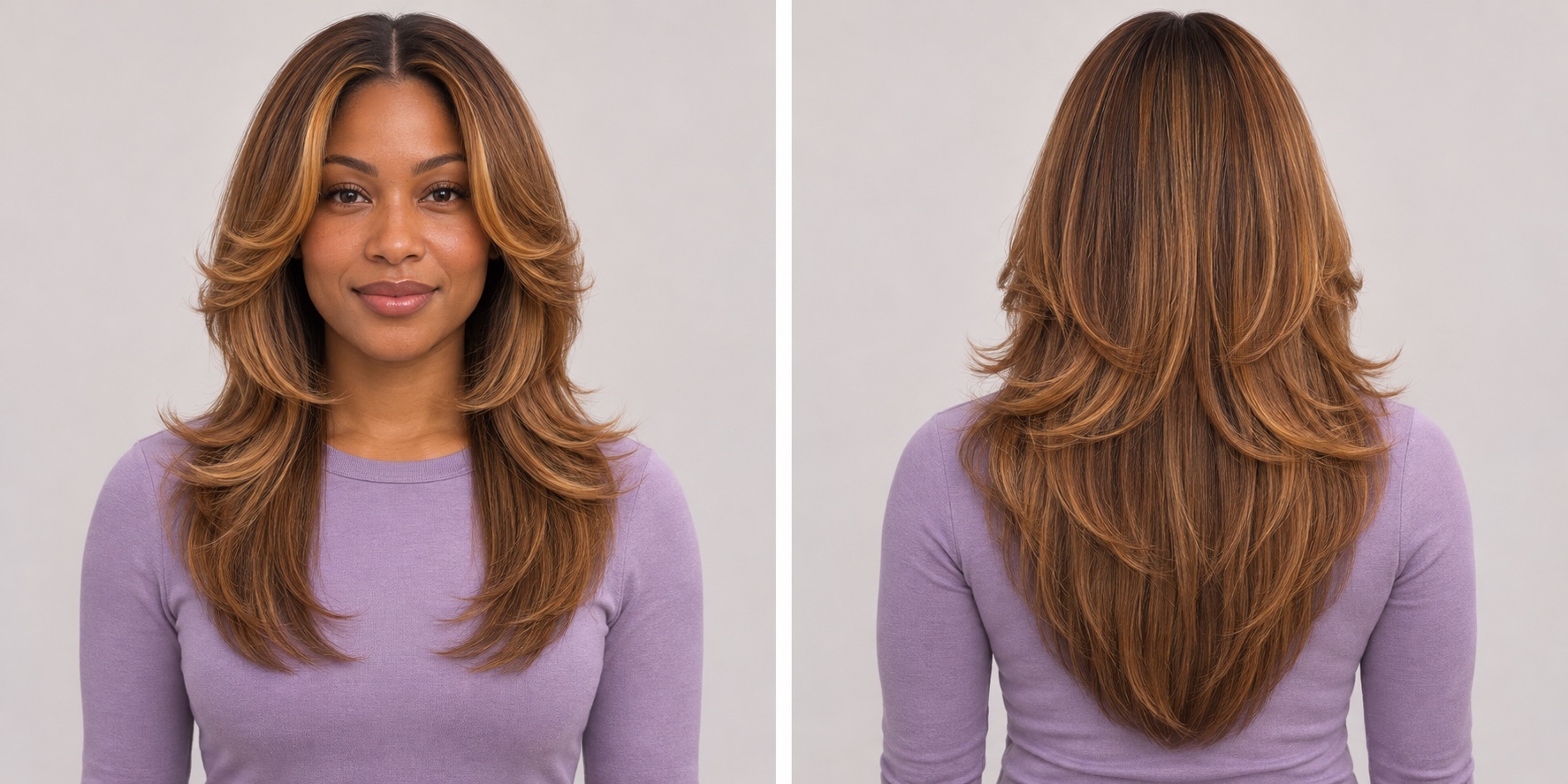
2. Butterfly layers with a shorter face-framing section
 AI-generated beauty illustration.
What you’re looking at: The shorter front section opens around the cheek and chin, with another sweep around shoulder level over a much longer base. From the back, there is more visible separation and movement through the upper lengths than in the first example. The long bottom section is still there.
Choose this direction if: You want a noticeable change around your face while keeping long hair underneath. This option makes the front the main event. It asks a different question from “How many inches off the bottom?”: how short are you comfortable going around your face?
Ask your stylist: “I want a butterfly-inspired shape with a long base and blended face-framing layers. Can we decide the shortest front length together, including where it falls when I wear my usual part?”
Make the request specific: Decide whether the shortest pieces must tuck behind your ears or reach a ponytail. Show your normal part before the stylist maps the front. For waves or curls, discuss how the front will sit when dry; don’t assume a chin-length piece in a smooth blowout will land at the same point in your natural texture.
The styling tradeoff: The lifted, swept-away front in the illustration is a styled finish. Ask the stylist to demonstrate one front section, including direction and tool size, before you leave. If that routine sounds like too much work, lengthen the face frame rather than hoping the same sweep appears automatically.
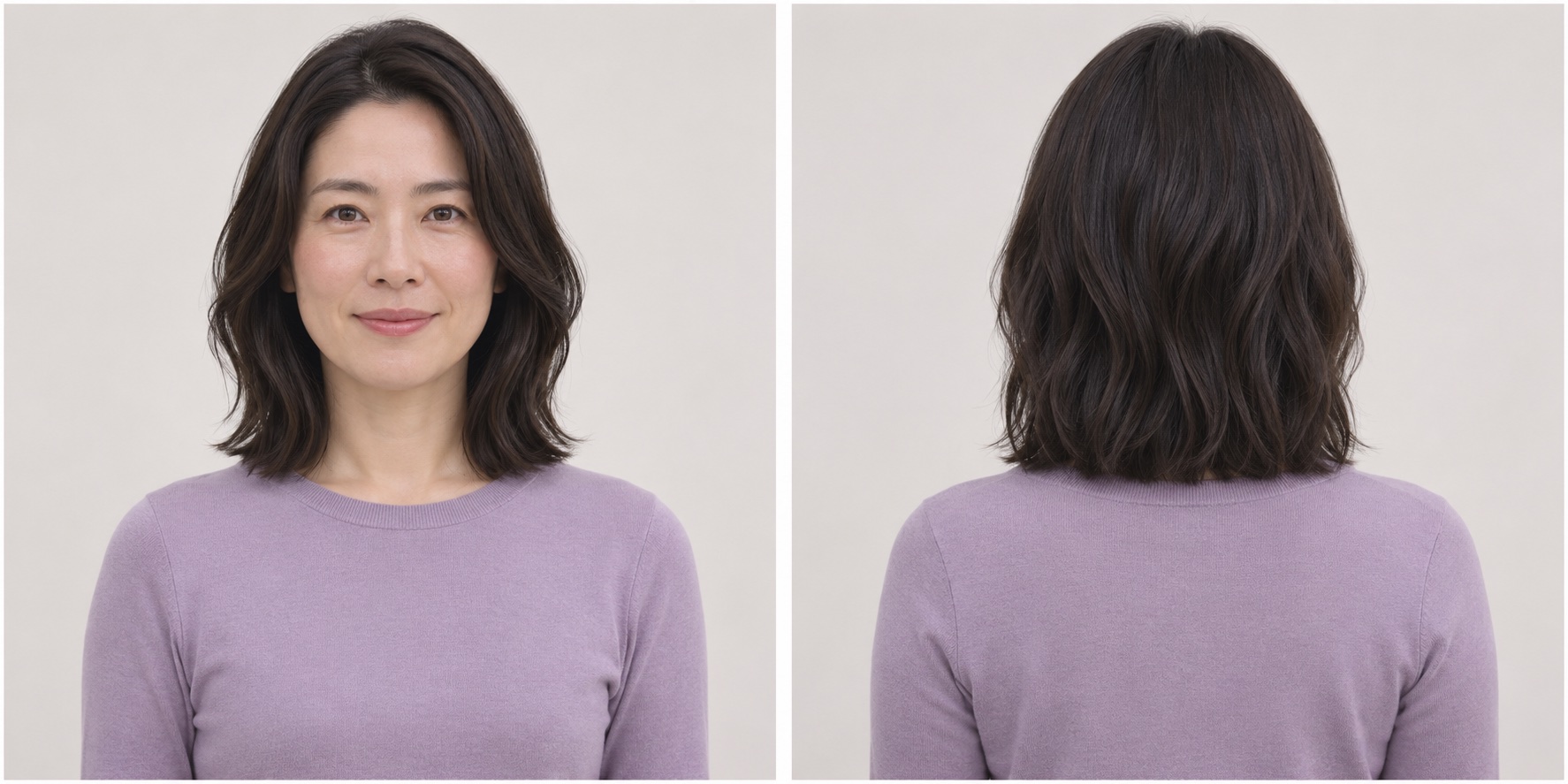
3. A collarbone-length layered lob
 AI-generated beauty illustration.
What you’re looking at: The longest pieces reach around the collarbone. The lower edge stays relatively compact, while blended layers give the sides movement. The front and back belong to the same shorter silhouette; this isn’t long hair with just a few pieces trimmed around the face.
Choose this direction if: You want the length itself to change, with enough movement for a loose bend. Decide whether you prefer a strong bottom edge or a more airy finish. Those can look quite different even when both photos are called a layered lob.
Ask your stylist: “I’d like a collarbone-length lob with blended layers and a fairly full bottom edge. Can you show me where it will land dry and how the back will connect to the front?”
Make the request specific: Point to the finished length on your body rather than saying “shoulder length.” Ask whether the ends will rest on your shoulders and kick outward. If you need to tie it up, have the stylist check the shortest nape and front pieces against that requirement.
The styling tradeoff: This shape changes as soon as the ends grow farther past the shoulders. Ask when your particular outline is likely to need reshaping. A dramatic bend in a picture doesn’t tell you how the same cut will look on a rushed, air-dried morning.
What to bring to the appointment
Save one front view and one back view of the same cut. Mark the features you like: shortest front piece, amount of layering, bottom edge and overall length. Bring a separate photo of anything you want to avoid, such as very wispy ends or a short fringe.
Before the scissors come out, ask these four questions:
- Where will the shortest layer sit when my hair is dry?
- What will this look like with my natural texture and usual part?
- Can I still tuck it behind my ears or tie it up the way I normally do?
- What styling would I need to get the finish I’m pointing to?
“I like the movement, but I don’t want to lose this much length” is a useful instruction. “Make it exactly like the picture” leaves the most important choices unstated.
Optional tools for the styled finish
You don’t need to buy anything to ask for the right cut. These two tools relate to the rounded, lifted finishes shown above; neither creates layers or changes the haircut itself. Use what you already own if it does the same job.
For a blowout bend: The Revlon One-Step Volumizer Plus has a 2.4-inch oval head and low, medium, high and cool settings. It’s an option to discuss if you want to style a rounded finish at home. Check the manufacturer’s instructions for preparation and use, and ask your stylist whether its size suits your new shortest pieces. It won’t reproduce a salon result on every texture.
We may earn a small commission if you buy through this link.
For setting shape without a heated roller: Conair’s self-grip set contains several roller sizes. The larger sizes offer a different kind of bend from the smaller ones, so ask your stylist to demonstrate the size and placement that suit your front section. Let the section set before removing a roller gently; don’t drag it through tangles. Skip them if self-grip rollers catch in your hair.
We may earn a small commission if you buy through this link.
The decision to make before you book
Keep your length and add lower movement: start with long layers. Change the frame around your face while retaining a long base: discuss butterfly layers. Change the whole silhouette to collarbone length: look at a layered lob. Once you’ve picked that direction, the appointment becomes a conversation about placement, density and upkeep, rather than a vague request for “some layers.”
Research and product details
Hair.com’s U-shaped versus V-shaped haircut comparison informed the outline distinction. L’Oréal Paris’s layered haircut guide was used as a terminology reference. The comparisons and consultation prompts above are GURLY’s editorial synthesis.
Tool specifications were checked against the linked Target listings and Revlon’s product page on November 2, 2026. Product details and availability can change.